• 필립스 소개
  • 필립스 소개
  • 필립스 소개
  • 뉴스 센터
  • 투자자 정보
  • 커리어
‌
‌
‌
‌
‌
‌
‌
‌
‌
‌
‌
‌
‌
‌
‌
‌
‌
‌
‌
‌
  • 소비자 제품소비자 제품
    • 고객 지원
    • 제품 등록
    • My Philips 계정
  • 전문 헬스케어전문 헬스케어
    • 문의 및 지원
    • 고객 서비스 포털
    • 자료 센터
  • 기타 비즈니스 솔루션기타 비즈니스 솔루션
    • 조명
    • 자동차
    • 보청 솔루션
    • 더 보기
    • 디스플레이 솔루션
    • 받아쓰기 솔루션
  • 필립스 소개필립스 소개
    • 뉴스 센터
    • 투자자 정보
    • 커리어
    • 더 보기
    • 지속가능성
    • 혁신의 역사
  • 구독하기구독하기
    • 전문 헬스케어 업데이트
    • 회사 소식 및 보도자료
  • 최신 상태 유지최신 상태 유지
    • 국가 선택한국 (한국어)
    • 한국 개인정보 처리방침
    • 글로벌 개인정보 처리방침
    • 법적고지
    • 필립스 쿠키 정책
    © Koninklijke Philips N.V., 2004 - 2026. 판권 소유.
    ‌
    ‌
    ‌
    ‌
    ‌
    ‌
    ‌
    ‌
    ‌
    ‌
    ‌
    ‌
    ‌
    ‌
    ‌
    ‌
    ‌
    ‌
    ‌
    ‌
    ‌
    ‌
    ‌
    ‌
    ‌
    ‌
    ‌
    ‌
    ‌
    ‌
    ‌
    ‌
    ‌
    ‌
    ‌
    ‌
    ‌
    ‌
    ‌
    ‌

    Philips Korea Highlights Operational Outcomes of Helium-Free MRI at SMC

    Samsung Medical Center accumulates approximately 18 months of clinical experience following the adoption of Korea’s first helium-free MRI at a tertiary hospital
    Demonstrates a sustainable radiology operations model focused on resource efficiency and operational stability

    • Jul 9, 2026
    • 약 3분 소요

    환경지속 가능성

    MR

    보도자료

    Philips Korea, a global leader in health technology, together with Samsung Medical Center (SMC), shared the operational outcomes of sustainable radiology operations enabled by helium-free MRI technology.

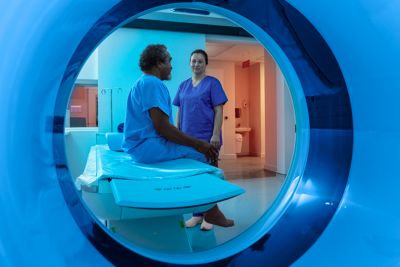
    Philips Ingenia Ambition X with BlueSeal XE

    Healthcare institutions today are increasingly expected to consider not only diagnostic accuracy and patient safety, but also resource efficiency and environmental impact. Diagnostic imaging systems such as MRI require significant amounts of energy and resources while delivering high levels of diagnostic performance. As a result, the industry is moving beyond performance focused evaluation criteria toward a more comprehensive approach that also incorporates operational efficiency and sustainability.

    Against this backdrop, SMC introduced a helium-free MRI system in March 2025, becoming the first tertiary hospital in Korea to adopt the technology. Since then, the hospital has accumulated approximately 18 months of operational experience, presenting a model for radiology operations that balances resource efficiency with operational stability.

    Philips Ingenia Ambition X with BlueSeal XE installed at SMC features a fully sealed magnet design that significantly reduces helium consumption compared with conventional MRI systems. While traditional MRI systems typically require approximately 1,500 liters of liquid helium, BlueSeal magnet technology requires only around 7 liters of helium and does not require helium refills throughout the system's lifetime.

    In addition, the system does not require a quench pipe to vent helium gas externally in the event of a magnet quench, in which the superconducting magnet loses its superconducting state and liquid helium rapidly evaporates. This reduces installation constraints and provides healthcare institutions with greater flexibility in site planning and space utilization, while also supporting long-term operational stability.

    Since becoming the first institution in Korea to adopt helium-free MRI technology, SMC has continued to build operational experience in sustainable radiology over the past 18 months. As a tertiary hospital operating around the clock, the institution emphasized the importance of maintaining a stable imaging environment while introducing a new MRI operational model that considers both resource efficiency and operational reliability.

    The system’s structural design, which eliminates the need for emergency venting infrastructure, also helped reduce installation limitations and minimize the burden associated with helium replenishment, contributing to long-term operational stability. The initiative is regarded as a case that expands the focus beyond MRI performance alone to include the broader sustainability of hospital operations.

    During the operational period, the hospital reduced helium consumption by approximately 1,500 liters compared with conventional MRI systems. In addition, by utilizing operational modes that minimize power consumption during non-operating hours, the system reduced annual electricity usage by approximately 40 megawatt-hours (MWh).[1] This is equivalent to the amount of energy required to fully charge more than 1,100 compact electric vehicles.[2] From a carbon emissions perspective,[3] the hospital also achieved an estimated reduction of approximately 16 tons of carbon dioxide emissions, comparable to the amount emitted by a passenger vehicle driving approximately 67,000 kilometers[4].

    Furthermore, even in the event of a quench, the fully sealed magnet structure minimizes helium loss and reduces the need for helium replenishment, enabling faster system recovery compared with conventional MRI systems. The system installed at Samsung Medical Center has continued to operate stably to date.

    “Maintaining a stable imaging environment is critically important for tertiary hospitals where diagnostic imaging systems operate 24 hours a day,” said Ji Hye Kim, M.D., Ph.D., Department of Radiology at SMC. “Going forward, healthcare institutions will increasingly need to consider not only image quality and examination efficiency, but also operational sustainability and resource efficiency as key priorities.”

    “SMC is the first healthcare institution in Korea to proactively validate the potential of sustainable radiology operations through the adoption of helium-free MRI technology,” said Nak-hoon Choi, Country Leader of Philips Korea. “This case demonstrates that healthcare providers can pursue both advanced diagnostic capabilities and sustainability at the same time.”

    Philips has installed more than 2,300 BlueSeal MRI systems worldwide, helping save over 6 million liters of helium globally. At Radiological Society of North America (RSNA) 2025, Philips also introduced a 3T helium-free MRI system designed to deliver enhanced MRI resolution.

    출처

    1. According to a comparison of Philips systems operating in stand-by and ready-to-scan modes based on COCIR standards
    2. For reference, the Kia Ray EV has a full-charge energy capacity of 35.2 kWh.
    3. Ministry of Environment’s latest published grid emission factor: 0.4173 tCO₂e/MWh (based on final energy consumption, 2023)
    4. Green Transport Movement (NGO): 237.9 g of CO₂ emitted per kilometer driven by a passenger vehicle (based on 2018 registered passenger vehicle fleet)

    로열 필립스(NYSE: PHG, AEX: PHIA)는 사람들의 건강과 웰빙 향상을 목표로 의미 있는 혁신을 제공하는 글로벌 헬스 테크놀로지 선도 기업이다. 필립스는 환자와 사람 중심의 혁신을 바탕으로 첨단 기술과 깊이 있는 임상 및 소비자 인사이트를 결합해, 소비자에게는 개인 맞춤형 헬스 솔루션을, 의료진과 환자에게는 병원 및 가정 환경에서 활용 가능한 전문 헬스케어 솔루션을 제공하고 있다.

    네덜란드에 본사를 둔 필립스는 영상 진단, 초음파, 영상 유도 치료, 환자 모니터링 및 헬스 인포메틱스 분야는 물론, 퍼스널 헬스 분야에서도 세계적인 리더로 자리하고 있다. 필립스는 2025년 기준 180억 유로의 매출을 기록했으며, 전 세계 100여 개국에서 판매 및 서비스를 제공하고 있다. 또한 약 64,300명의 임직원이 함께하고 있다. 필립스 관련 최신 소식은 www.philips.com/newscenter 에서 확인할 수 있다.

    미디어 자료

    • Philips Ingenia Ambition X with BlueSeal XE

      Philips Ingenia Ambition X with BlueSeal XE

      Philips Ingenia Ambition X with BlueSeal XE

    미디어 문의 연락처

    홍하림 프로필

    홍하림

    Brand & Communications Manager, Korea
    연락처 정보

    이 페이지 공유